

House of Ashes review | PC Gamer - bagleytheinglee
Our Verdict
Great monsters, stunning locations and a quality mystery makes this one of Supermassive's best.
PC Gamer Verdict
Swell monsters, stunning locations and a quality mystery makes this united of Supermassive's top.
Demand to get it on
What is it?The tierce part of a horror anthology, this time kick in an antediluvian Sumerian tabernacle.
Expect to pay£25/$30
Developer Supermassive Games
Publisher Bandai Namco
Release October 22
Reviewed onGTX 1080 Ti, Intel i7-8086K, 16GB Jam
MultiplayerYes
LinkConfirmed site
The Dark Pictures Anthology is a serial publication enthralled aside cinematic horror, and its setup, with each entry spinning a raw yarn, has allowed Supermassive to frame a wide net. Following Gentleman of Medan's ghost send on and Little Hope's witch problem, we today find ourselves exploring a Geographic region temple with marines and CIA agents in Theatre of Ashes. The switch from civilians and jump scares to soldiers and gunfights is a significant nonpareil, and ab initio gave me pause, but the anthology is all the stronger for it.
Soldiers expiration on a mission and discovering something monstrous or fey is, of course, a classic writing style figure that's produced some of my favourites, from Aliens to Dog Soldiers. Just for a series that owes more to take a chance games than action romps, heavily armed jarheads seemed care an odd choice. I shouldn't take over been worried, though, because it turns out that House of Ashes' gruesome bat-like antagonists don't give a shit about bullets.
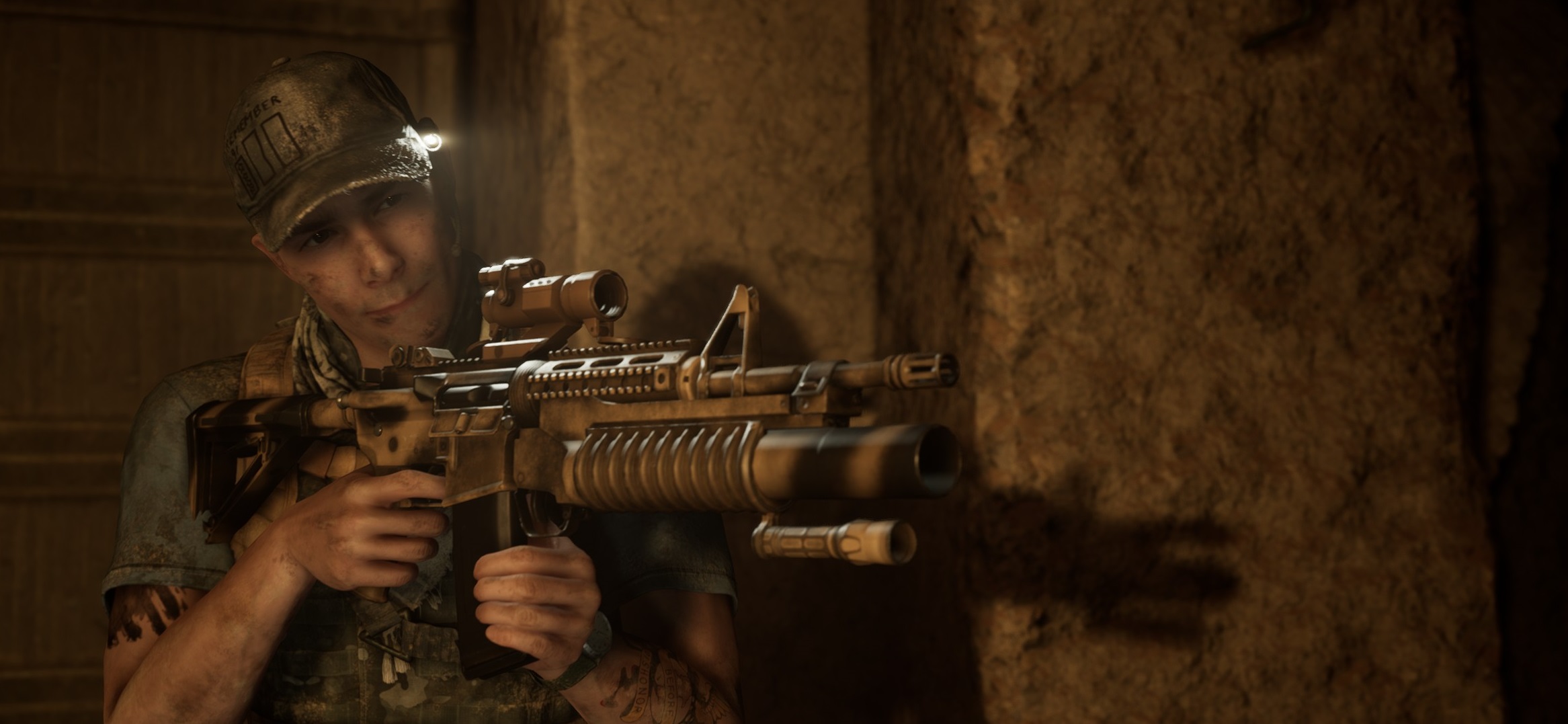
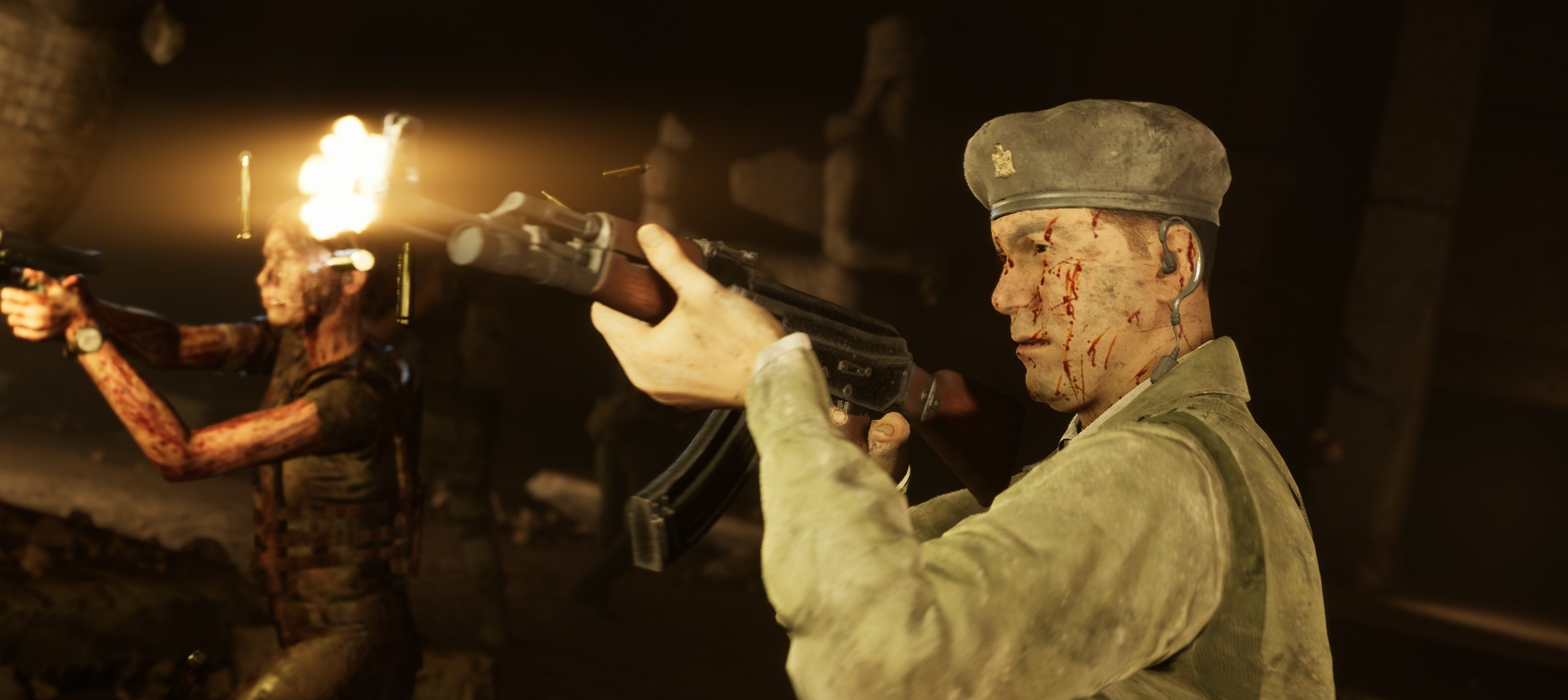
This doesn't stop the marines, OR the pair of Iraqi Republican Guards that fall into the Sumerian temple with them, from expending a lot of ammo. And explosives. When they aren't impotently shooting monsters, they're shooting each otherwise. On that point are a whole lot of long, flashy QTEs, and they rank arsenic some of Supermassive's most entertaining, and certainly most elaborate.
Carry a big stick
One of the Republican Guards, Salim, is playable, and atomic number 2 features in most of the top brawls. He gets his workforce on a big metal bar early that I swear off must represent imbued with some mystical powers, and boy does he put it to good use, saving lives, impaling monsters and tossing it like a javelin—honestly, he's so in effect with this thing that the Avengers should sacque Hawkeye and hire this dude. Divagation from being an ass-kicker, Sanchez also gives us the crucial Iraki perspective, balancing out the initially gung-ho attitudes of the Americans.
Piece House of Ashes' monsters like to lurk round in the dark, Supermassive doesn't hold them back too much. They're revealed quickly, and from in that respect connected you'll see them a lot, especially their hideous claws, which perpetually sneak out of door cracks. They tick all the movie monster boxes: they'ray disgusting to look up at, they puddle bone-chilling noises, they laugh at bullets, but they have extraordinary glaring weaknesses that the survivors will, naturally, get word to overwork.
Disdain a stronger center on lively carry out sequences, Planetary hous of Ashes makes much of way for critiques of the Iraq War, personal rivalries and even a ill-omened love triangle. Information technology's complete fodder for the horror, fostering tension and mount finished potential betrayals. You'll get a few opportunities to really screw all over your 'Allies' at key moments, or you lav try to make everyone BFFs. You're the one making the choices, but it's al dente non to get involved in what the characters are feeling. Their personalities and relationships are established proto on, and I launch myself doing the things that successful sense for them kind of than making the smart calls.
Take, for example, the cured-trodden trope where a survivor is injured or infected. House of Ashes likes this one a lot. There was one example particularly where my co-op buddy and I purposefully made what was so clearly the incorrectly superior, time and again. The game kept giving us chances to kill or leave-taking a character who was obviously going to give rise disaster, but after hearing the marines yammering on about never leaving anyone behind, the bad choice was the unencumbered victor. And revulsion is all some courting disaster. A horror picture show where everyone makes quantitative relation decisions is a tedious horror movie.
IT's amazing that I made it out with only one important character dead. Eric, the USAF Colonel running the operation didn't survive the dark, only he was a bit of a loser, an insecure 'nice guy', so that's fine. Theatre of Ashes nails the horror trick where, if you're not rooting them for them to survive, you'Ra having a ripe time rooting for them to die. Not that I'd planned Eric's death, which was sealed after a much earlier bad decision.
Quick and easy
There are consequences to failing a QTE, but that's non how Eric died. In fact, I succeeded in one to let him make a live heroic act. Choices determine World Health Organization lives and dies more than dexterity. And piece they're intense, the QTEs are still simple and break you plenty of warning beforehand, preparing you for their imminent arrival and even letting you know what kinda QTE is coming up.
Little Hope is where Supermassive started adding this helpful context, but House of Ashes continues in this vena, still if information technology's just with little things like making it clear when an interaction will be active the conniption forward. You know not to touch information technology until you've finished exploring. This is in particular beneficial in co-op, and so you won't personify the person WHO stopped their buddy from superficial at more reliefs of Geographic region demons OR journal excerpts from the '30s.
The unfortunate quintet become a stripe of amateur archaeologists, with the soldiers following in the footsteps of an old expedition. House of Ashes continues the anthology's predilection for playing with literal myths and humanities events, this time revelling in Mesopotamian legends and the 'Curse of Akkad', a poem particularisation the destruction of the Akkadian Imperium after the Emperor butterfly Naram-Sim declared himself a god and plundered a temple. In the poem, the gods got avenge on ol' Naram-Sim thanks to an invasion from the Gutian people. In House of Ashes' prologue, however, the Gutians are not nearly A big a problem as the blood-sucking metro monsters.
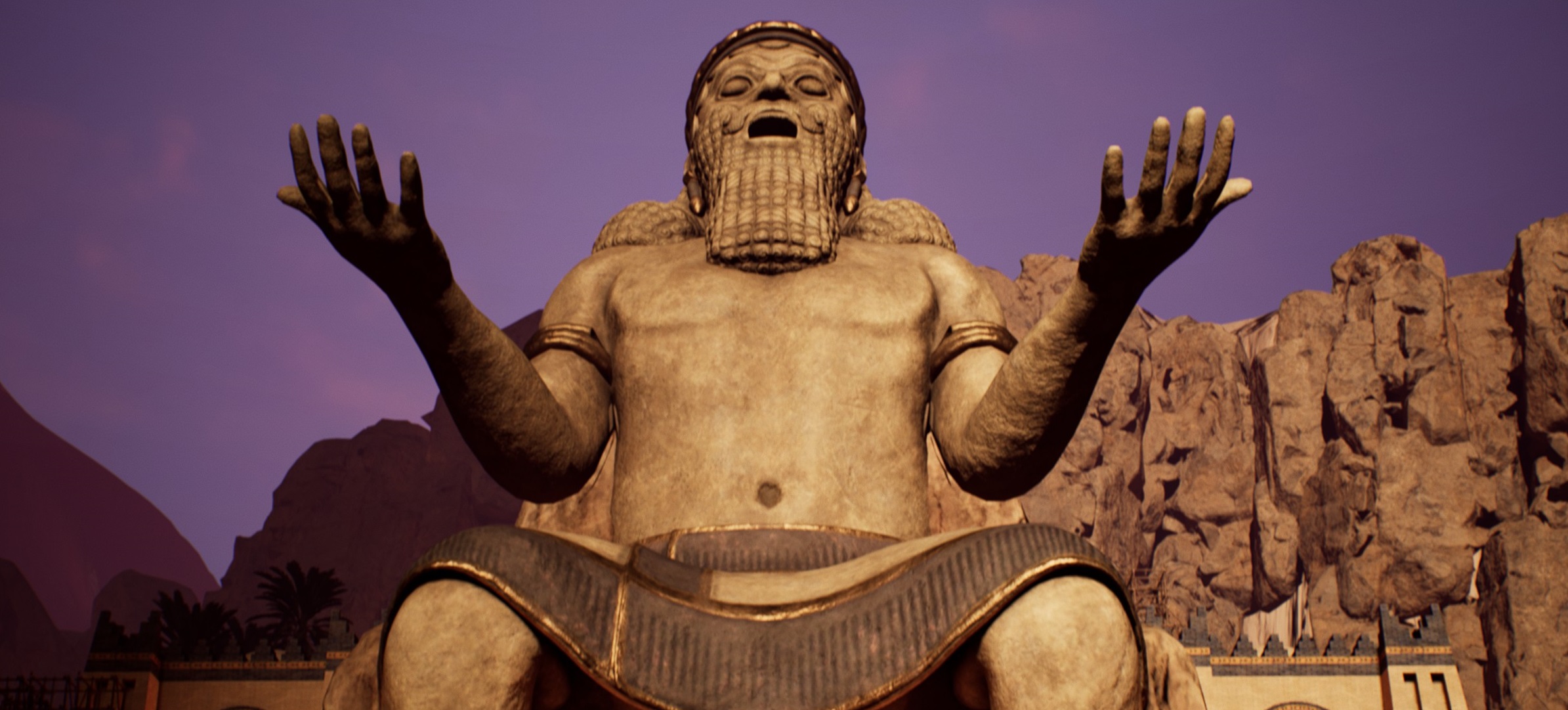
A Sumerian temple is a number more grand than a small Brand-new England town or a hoary boat, and the secret at the heart of it—just what the heck are these beasties?—meant that I was ravenous for any document, tablet or diary I could let my hands on. Throughout, my chap archeologist and I kept throwing theories to and fro—another reason wherefore you really need to try on this with at least one other person—and it's got a lot of tricks to keep you questioning.
Separation anxiousness
Mechanically, there's little that's new here, simply it's a slightly stronger co-op experience. Again there are three modes, lease you play alone, with improving to four friends (sharing one controller) or in the shared story mode with one other someone. Common story mode antecedently let you play as everyone, but this time you have specific characters to look up to after. This makes a good deal of sense, as Rachel—a CIA athletic field officer and Eric's alienated wife—and Salim both have long sections where they'atomic number 75 on their own. Trying to play as one of them if you weren't controlling them connected their alone adventures would just equal inept, As you'd be lacking important context about what they've seen and done.
This gave my chum and I a greater sense of ownership over the characters, and antimonopoly makes information technology easier to roleplay consistently. It as wel means you really do need to depend on your partner filling you in, as you'll much come up yourself detached and doing entirely different things. At one point, I was having a core-to-heart about relationships while my pal was with Rachel, up to her eyes in a lake of stemma. One of us was much stressed out than the other.
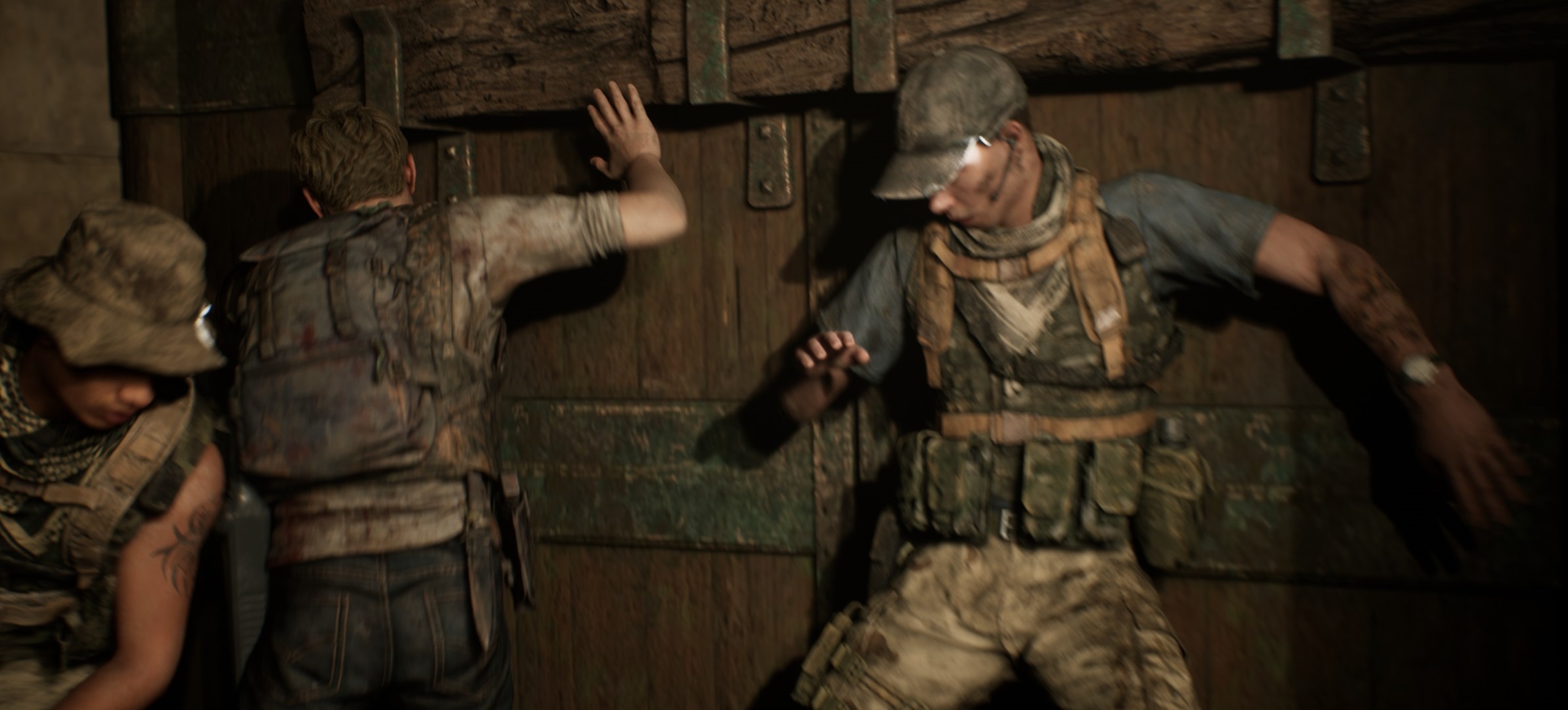
I just wish the camera was better. There are a lot of darkening, narrow corridors, and the photographic camera will rapid growth in right to your shoulder, making your character take upbound half the screen. Once in a while it's clearly trying to suggest a shooter, but it's too floaty and ponderous to work. It's floury for slowly exploring the temple's more spacious chambers, leastways, and when it comes to getting a good medium shot, IT's e'er employed. It gives you some great excuses to hit that screenshot button. Unfortunately around of my best are firmly in spoiler territory.
Starting my first playthrough at 10pm was likely a misidentify, because it kept me dangling along its abstract until I crawled unconscious of the Sumerian temple at dawn. And of course I had to then drop another 30 minutes dissecting it with my supporter. The last act gets pretty wild and is easily the best payoff Supermassive has set raised so Army for the Liberation of Rwanda, but the journey to get thither is pretty damn compelling too. Like so much horror, it teeters on a perilous tightrope 'tween stupid and cool, and it doesn't e'er land on the right side, but it's still fantastically fun even if information technology's making you groan.
Put up of Ashes
Great monsters, stunning locations and a quality mystery makes this unitary of Supermassive's unsurpassed.

Fraser is the UK online editor and has actually met The Internet in person. With terminated a decade of experience, helium's been around the block a a few times, serving as a freelancer, news editor and fecund reader. Strategy games have been a 30-year-long fixation, from tiny RTSs to sprawling persuasion sims, and he never turns down the chance to rave about Total War OR Crusader Kings. He's also been well-known to set up shop in the latest MMO and likes to wind dispirited with an infinitely deep, systemic RPG. These days, when he's not editing, he can usually be institute writing features that are 1,000 words too long. He thinks labradoodles are the best dogs but doesn't get to write about them much.

Source: https://www.pcgamer.com/house-of-ashes-review/
Posted by: bagleytheinglee.blogspot.com
0 Response to "House of Ashes review | PC Gamer - bagleytheinglee"
Post a Comment